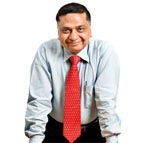
Marc S. Tucker
(President & CEO, National Center on Education and the Economy)
reveals that top-performing countries concentrate on producing a surplus
of good educationiSt and ensuring every student has a fine teacher
Q. Serving on the research board and framing education policies since long, where do you see India standing?
A. It seems to me that much of the progress in India in recent years has been made in spite of its government. When I was in India a few years ago, I saw enormous hunger for education  everywhere. I saw that cry for education is being met in many places by a bewildering array of agencies, institutions and individuals. It is conceivable that technology might make a substantial difference to India, although my own reading of history in my country is that technology has rarely lived up to its promise in the field of education. We have been researching the countries with the best national school systems for more than 20 years. They did not get there with technology, but the old-fashioned way, by upgrading their teachers, their standards, their curricula and their testing systems. The principles that underlie successful education systems are the same everywhere. If India wants to join the ranks of the top-performing national education systems, it needs to study those principles and adopt them.
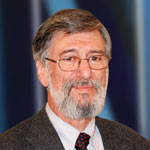 everywhere. I saw that cry for education is being met in many places by a bewildering array of agencies, institutions and individuals. It is conceivable that technology might make a substantial difference to India, although my own reading of history in my country is that technology has rarely lived up to its promise in the field of education. We have been researching the countries with the best national school systems for more than 20 years. They did not get there with technology, but the old-fashioned way, by upgrading their teachers, their standards, their curricula and their testing systems. The principles that underlie successful education systems are the same everywhere. If India wants to join the ranks of the top-performing national education systems, it needs to study those principles and adopt them.
Q. How are educational practices in the United States different from other countries?
A. If you look at top performing countries, one of the important steps they have taken is to improve the quality of their teaching force. They have worked hard to raise the standards for entry of teachers in their institutions. In almost all the top 10 performing countries, you will see ratios of applications to acceptances in the order of 6:1, 8:1 and 10:1, resulting which they are recruiting their teachers from a very high segment of their ability spectrum, essentially the same segment they recruit their high status professionals from. Also, there is an increased emphasis on diagnosis and prescriptions and teachers are able to quickly recognise who is lagging behind and needs help. This practice has become an important part of the curricula in these teacher education systems. Click here to read full interview...
Read More IIPM Related Articles
Zee Business Best B-School Survey 2012
Prof. Arindam Chaudhuri's Session at IMA Indore
IIPM IN FINANCIAL TIMES, UK. FEATURE OF THE WEEK
IIPM strong hold on Placement : 10000 Students Placed in last 5 year
IIPM's Management Consulting Arm-Planman Consulting
Professor Arindam Chaudhuri - A Man For The Society....
IIPM: Indian Institute of Planning and Management
IIPM makes business education truly global
Management Guru Arindam Chaudhuri
Rajita Chaudhuri-The New Age Woman
IIPM B-School Facebook Page
IIPM Global Exposure
IIPM Best B School India
IIPM B-School Detail
IIPM Links
IIPM : The B-School with a Human Face
Read More IIPM Related Articles
Zee Business Best B-School Survey 2012
Prof. Arindam Chaudhuri's Session at IMA Indore
IIPM IN FINANCIAL TIMES, UK. FEATURE OF THE WEEK
IIPM strong hold on Placement : 10000 Students Placed in last 5 year
IIPM's Management Consulting Arm-Planman Consulting
Professor Arindam Chaudhuri - A Man For The Society....
IIPM: Indian Institute of Planning and Management
IIPM makes business education truly global
Management Guru Arindam Chaudhuri
Rajita Chaudhuri-The New Age Woman
IIPM B-School Facebook Page
IIPM Global Exposure
IIPM Best B School India
IIPM B-School Detail
IIPM Links
IIPM : The B-School with a Human Face