Wednesday, September 25, 2013

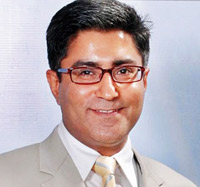
Laxmikanth Venkatraman (MD, Broadridge Financial Solutions India Pvt. Ltd.) tells Schweta Chaturvedi that leaders should attract the right talent and allow them to be themselves by following the right approach

Q. What makes an ordinary company a ‘great organisation’?
A. It is the people and always the people; this is what I have always believed in and have experienced too. It is the ability to attract, retain and nurture people that makes an organisation great. People make all the difference inside or outside a workplace and that is why they need to feel connected with the organisation. Our job as leaders is primarily to attract the right talent and allow them to be themselves which can be done through the following approach:

Experience, Explore and Grow
People should feel empowered. We, as leaders, have to be the Thirthankara (according to Jainism, Thirthankara is a human being who in addition to achieving liberation and enlightenment, became a role model and leader for those seeking spiritual guidance) who with knowledge and guidance will enable the connection and bridge the gap.

Q. What are your thoughts on the talent base in India? What is the need of the hour to generate more employment opportunities for them?
A. I think, fundamentally, our talent base is good both from the perspective of technical skills as well as from that of soft skills and this is increasingly being recognised globally.

There are some challenges that we have from our education system and from companies which do not equip people adequately to be job ready. But the biggest hurdle in my view is embedded in our thinking. Our system constrains us to think only in a certain manner. Our upbringing and milieu have instilled fear in our minds which has conditioned our living. We need to learn to unlock ‘that’ fear. I believe in F=S=O, that is, fear = scarcity = opportunity (on the lines of counterfactuals). Click here to read more...

Like us and read IIPM Think-Tank articles on facebook

Wednesday, July 31, 2013

Emerging trends

The short-time working programme in Germany, known as ‘Kurzarbeit’, is supposed to ensure that companies across all sectors keep workers employed in times of crisis or low demand by reducing working hours and consequently wage costs. The Federal Employment Agency provides funding for short-time working based on business cycle and economic reasons, providing that certain conditions are met. The agency tops up reduced wages by a certain percentage and subsidises social security contributions on short-time wages by 50 per cent (up to 100 per cent during qualification programmes and after seven months). The programme existed before the crisis, but was extended because of it. The incentives to encourage employers to retain workers by reducing working hours instead of firing them were originally due to expire in 2010-end. According to the German government, the scheme has proved itself during the economic crisis by keeping unemployment lower than in many of the country’s trading partners.

Organising union activities in transnational firms
Between 2007 and 2008, Romania’s Free Trade Union Federation of Commerce (FSLC) carried out activities in companies operating in Romania, with the support of other trade organisations. FSLC concentrated on organising employees in transnational companies. The main companies targeted were Metro Cash & Carry, Carrefour and Billa-Rewe. As a result, FSLC and the newly established Metro union ‘Solidaritatea’ signed a collective agreement in April 2008 for Metro Cash and Carry.

The agreement improved working conditions and wages for the employees at Metro. An information and consultation forum for social dialogue at Metro Romania was also established, and the Romanian employees won a seat on Metro’s European works council. The Metro collective agreement gave a 9.5 per cent increase in wages, a loyalty bonus after five years of employment, and a 10 per cent bonus for work on Saturdays and Sundays. It also provides three paid days each month for union representatives, and stipulates that employers have an obligation to focus on improving working conditions. Click here to read more...

Like us and read IIPM Think-Tank articles on facebook
IIPM Think-Tank
Business and Economy
The Sunday Indian
Prof. Arindam Chaudhuri
Prof. Rajita Chaudhuri
4ps Business and Marketing
The Human Factor

Saturday, July 20, 2013

Universities have two roles – creating and disseminating knowledge.

Third, focus on improving faculty quality. Universities have two roles – creating and disseminating knowledge. This translates into two key responsibilities for faculty, research and teaching. The importance of faculty undertaking these dual roles is demonstrated by the fact that there are almost no top teaching business schools globally that do not also excel in research. Indeed, excellence in research is an important requirement for eminence in teaching and education. Unfortunately, most Indian business schools do not recognise research, and do not view it as related to teaching and education. As a result, with few exceptions, faculties undertake little research and many institutions rely heavily on practitioners who lack fundamental understanding of theoretical foundations.

Not all faculties or institutions need to undertake global-standard research. Yet the current state in India, where perhaps only one business school does so, suggests a major underlying problem. The solution is a challenging one – introduce research-oriented PhD programmes, hire better quality faculty, offer adequate compensation and align incentives to include research excellence. A concerted effort to draw on Indian faculty abroad to help develop doctoral programmes and faculty should be an immediate priority.

Fourth, allow foreign institutions to establish campuses in India, as that will increase options for students, introduce beneficial competition, raise standards and increase investments in education. While there must be some quality standards, a broad range of institutions should be allowed in. The rationale for doing so is similar to that of encouraging foreign direct investment and arguments against doing so, equally mistaken. Click here to read more...

Read More IIPM Related Articles
Zee Business Best B-School Survey 2012
Prof. Arindam Chaudhuri's Session at IMA Indore
IIPM IN FINANCIAL TIMES, UK. FEATURE OF THE WEEK
IIPM strong hold on Placement : 10000 Students Placed in last 5 year
IIPM's Management Consulting Arm-Planman Consulting
Professor Arindam Chaudhuri - A Man For The Society....
IIPM: Indian Institute of Planning and Management
IIPM makes business education truly global
Management Guru Arindam Chaudhuri
Rajita Chaudhuri-The New Age Woman
IIPM B-School Facebook Page
IIPM Global Exposure
IIPM Best B School India
IIPM B-School Detail
IIPM Links
IIPM : The B-School with a Human Face

Thursday, February 28, 2013

Professionals make for better teachers

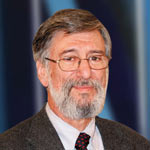
Q. Please give us an overview of the education system in the United Kingdom. Also, how different is it from that in India?
A. The education system in the United Kingdom has experienced the same set of challenges that the Indian system has at some point or the other. In terms of quality and availability of faculty, we have been through a fair share of challenges. Universities in the United Kingdom have depended on faculty with no real-world work experience, even for teaching accountancy courses. On the contrary, the independent training institutes have relied heavily on qualified business professionals to teach professional courses. What we have seen, therefore, is a trend where the independent institutes have almost taken over the entire demand and supply of accounting professionals. Students have moved away from university degrees in accounting to professional programmes supported by training institutions.

Q. What kind of training programmes are conducted for teachers in the United Kingdom?
A Training or qualification is as critical as its application and relevance. Quality teachers have experience of working in the field to back their academic knowledge. The best teacher training programme would expose teachers teaching accountancy or business-related subjects to the real world of business and finance.

Q. What is more important – education or experience, especially at a time when universities and companies are shaking hands?
A. When it comes to teachers, relevant work experience is as important as the academic qualification. Sound exposure to industry ensures that their teaching is backed by examples and case studies from the real world. That means students are more ‘business ready’ when they come out of the institute and the companies do not have to spend too much time in training them. Click here to read more..

Read More IIPM Related Articles
Zee Business Best B-School Survey 2012
Prof. Arindam Chaudhuri's Session at IMA Indore
IIPM IN FINANCIAL TIMES, UK. FEATURE OF THE WEEK
IIPM strong hold on Placement : 10000 Students Placed in last 5 year
IIPM's Management Consulting Arm-Planman Consulting
Professor Arindam Chaudhuri - A Man For The Society....
IIPM: Indian Institute of Planning and Management
IIPM makes business education truly global
Management Guru Arindam Chaudhuri
Rajita Chaudhuri-The New Age Woman
IIPM B-School Facebook Page
IIPM Global Exposure
IIPM Best B School India
IIPM B-School Detail
IIPM Links
IIPM : The B-School with a Human Face

Monday, January 14, 2013

Top-performing countries concentrate on producing a surplus of good educationiSt and ensuring every student has a fine teacher.

 Marc S. Tucker (President & CEO, National Center on Education and the Economy) reveals that top-performing countries concentrate on producing a surplus of good educationiSt and ensuring every student has a fine teacher

Q. Serving on the research board and framing education policies since long, where do you see India standing?
A. It seems to me that much of the progress in India in recent years has been made in spite of its government. When I was in India a few years ago, I saw enormous hunger for education everywhere. I saw that cry for education is being met in many places by a bewildering array of agencies, institutions and individuals. It is conceivable that technology might make a substantial difference to India, although my own reading of history in my country is that technology has rarely lived up to its promise in the field of education. We have been researching the countries with the best national school systems for more than 20 years. They did not get there with technology, but the old-fashioned way, by upgrading their teachers, their standards, their curricula and their testing systems. The principles that underlie successful education systems are the same everywhere. If India wants to join the ranks of the top-performing national education systems, it needs to study those principles and adopt them.

Q. How are educational practices in the United States different from other countries?
A. If you look at top performing countries, one of the important steps they have taken is to improve the quality of their teaching force. They have worked hard to raise the standards for entry of teachers in their institutions. In almost all the top 10 performing countries, you will see ratios of applications to acceptances in the order of 6:1, 8:1 and 10:1, resulting which they are recruiting their teachers from a very high segment of their ability spectrum, essentially the same segment they recruit their high status professionals from. Also, there is an increased emphasis on diagnosis and prescriptions and teachers are able to quickly recognise who is lagging behind and needs help. This practice has become an important part of the curricula in these teacher education systems. Click here to read full interview...

Read More IIPM Related Articles
Zee Business Best B-School Survey 2012
Prof. Arindam Chaudhuri's Session at IMA Indore
IIPM IN FINANCIAL TIMES, UK. FEATURE OF THE WEEK
IIPM strong hold on Placement : 10000 Students Placed in last 5 year
IIPM's Management Consulting Arm-Planman Consulting
Professor Arindam Chaudhuri - A Man For The Society....
IIPM: Indian Institute of Planning and Management
IIPM makes business education truly global
Management Guru Arindam Chaudhuri
Rajita Chaudhuri-The New Age Woman
IIPM B-School Facebook Page
IIPM Global Exposure
IIPM Best B School India
IIPM B-School Detail
IIPM Links
IIPM : The B-School with a Human Face

Saturday, January 12, 2013

That formal system

Ajay Mangal, CEO, Umang Realtech Pvt. Ltd.
 
When I was 18, my pocket money was... less than Rs 10.
When I was 18, my wardrobe was full of... only formals.
When I was 18, my walls had posters of... Sunil Gavaskar.
When I was 18, my study hours per day were... more than 12 hours.
When I was 18, one lesson my dad would teach me everyday was... work hard, it will not go waste.
When I was 18, my wallet would have... no money.
When I was 18, my ambition was... to be a chartered accountant.
When I was 18, my favourite hangout was... the library of Sri Ram College of Commerce. 
When I was 18, I would travel to college by... DTC bus or university special.
When I was 18, the sports I enjoyed the most was... Cricket.
When I was 18, my mentor in life was... my father.
When I was 18, I read... only my text books.
When I was 18, favourite actor was... Amitabh Bachchan.

Wednesday, January 09, 2013

Creating high-performance culture

Performance is the essential internal engine of an organisation which wants to achieve a notable impact in its sector. There is an array of management tools that promises to help improve the performance management process. However, an effective performance management system encompasses everything managers do to ‘lead, manage, assess and develop employees such as establishing objectives, planning individual career development and various assessments, including self assessment, manager assessment, and 360-degree assessments’. This article delineates elements to help leaders and HR practitioners discuss, propose and deliver the best in process.

Performance management should be seen as a continual set of activities like goal setting, managing, coaching, providing feedback, development planning and rewarding and recognising. The organisations that follow it zealously on a regular basis are more effective and perform better. As a practice, leaders should create their business plans or balance scorecards before start of the performance year and should cascade it before the year. Absence of it results in an employee missing the opportunity to be reviewed for the whole year, hence, in effect his annual performance is measured for an incomplete year.

Another observation is that organisations do not customise rating scales on the basis of their needs. Some inherit the scales from their parent organisations to align them globally. Performance rating scales should depend on economic scenarios of the operating market, quantifiable aspect of performance, performance philosophy (meritocratic or tenure), managerial depth, variable pay plans and learning and development agenda of the organisation. Click here to read more...

Read More IIPM Related Articles
Zee Business Best B-School Survey 2012
Prof. Arindam Chaudhuri's Session at IMA Indore
IIPM IN FINANCIAL TIMES, UK. FEATURE OF THE WEEK
IIPM strong hold on Placement : 10000 Students Placed in last 5 year
IIPM's Management Consulting Arm-Planman Consulting
Professor Arindam Chaudhuri - A Man For The Society....
IIPM: Indian Institute of Planning and Management
IIPM makes business education truly global
Management Guru Arindam Chaudhuri
Rajita Chaudhuri-The New Age Woman
IIPM B-School Facebook Page
IIPM Global Exposure
IIPM Best B School India
IIPM B-School Detail
IIPM Links
IIPM : The B-School with a Human Face

Monday, December 03, 2012

During a crisis situation, it is not enough to have just one backup plan. In the current economic scenario, it is necessary to plan for the worse.

When a company – regardless of its industry – is going through a rough patch and the CEO is an experienced veteran, then according to Chen and Hambrick, the CEO would not be able to think the way out. “He is too trapped by the baggage of the accumulated wisdom of that industry, so the longer the tenure of the industry incumbent, the more a company will benefit from getting rid of him,” says Hambrick.

The same would not be applied when the CEO is an industry-outsider; in that case figuring out a new pathway is easy and seems feasible.

The in-house talent cannot be ruled out in this case but the ‘any-fresh-face-will-do’ attitude will eventually prove worthless unless you are lucky enough. Looking for an in-house alternative can also help avoid the internal unrest that could result from disgruntled employees over missing the opportunity.

One of the key factors in deciding the turnaround is the board’s involvement. The matters related to the CEO shuffling are amongst the most prioritised jobs for any board. Read more...

Read More IIPM Related Articles
Zee Business Best B-School Survey 2012
Prof. Arindam Chaudhuri's Session at IMA Indore
IIPM IN FINANCIAL TIMES, UK. FEATURE OF THE WEEK
IIPM strong hold on Placement : 10000 Students Placed in last 5 year
IIPM's Management Consulting Arm-Planman Consulting
Professor Arindam Chaudhuri - A Man For The Society....
IIPM: Indian Institute of Planning and Management
IIPM makes business education truly global
Management Guru Arindam Chaudhuri
Rajita Chaudhuri-The New Age Woman
IIPM B-School Facebook Page
IIPM Global Exposure
IIPM Best B School India
IIPM B-School Detail
IIPM Links
IIPM : The B-School with a Human Face

Monday, November 26, 2012

The focus of HR should be to attract the talents who are willing to take risk and script success stories in the form of intrinsic rewards.

HR professionals must acquaint, update and equip themselves with the financial and operational aspects of the turnaround plan and a thorough understanding of market forces in operation to address the pressing realities of the function and interdepartmental needs. Turnarounds are uncertain, demanding, risky in nature and tricky in approach and, the key issues are leadership, communication, and change management. These are the issues that require a competent HR team to handle and set directions for organisations. The role of HR leader is critical and crucial as he or she not only steers his or her team to brace and facilitate change, but also guides the top management including the CEO in overcoming HR challenges in the form of layoffs, legal tangles, reorganisation and absorbing the cultural shocks. Lastly, the HR team needs to devise an exit strategy from post-turnaround phase as organisations cannot continue to work under a war-like scenario.

Turnaround phase in organisational life is not uncommon. The turnaround HR team needs to understand the realities and act upon the best ideas and innovations. The role of HR leader during a turnaround can be aptly summarised as “Obstacles don’t have to stop you. If you run into a wall, don’t turn around and give up. Figure out how to climb it, go through it, or work around it”. Read more...

Read More IIPM Related Articles
Zee Business Best B-School Survey 2012
Prof. Arindam Chaudhuri's Session at IMA Indore
IIPM IN FINANCIAL TIMES, UK. FEATURE OF THE WEEK
IIPM strong hold on Placement : 10000 Students Placed in last 5 year
IIPM's Management Consulting Arm-Planman Consulting
Professor Arindam Chaudhuri - A Man For The Society....
IIPM: Indian Institute of Planning and Management
IIPM makes business education truly global
Management Guru Arindam Chaudhuri
Rajita Chaudhuri-The New Age Woman
IIPM B-School Facebook Page
IIPM Global Exposure
IIPM Best B School India
IIPM B-School Detail
IIPM Links
IIPM : The B-School with a Human Face

Thursday, November 22, 2012

Managing the Concern Together

Q. How can HR increase its visibility in the organisation?
A. HR can increase its visibility by having a deep understanding of the business it serves. HR cannot just focus on HR topics (compensation, benefits, staffing, employee relations, etc.) but also needs to understand how the business operates to have an impact on profit or service. This is what CEOs want from HR, in addition to managing its responsibilities and keeping the organisation on track to be competitive.

Q. What are the roadblocks that CEO-HR relationship faces while working on a common ground?
A. If HR fully understands the business it supports, the roadblocks should be few and far between. A strong relationship between the CEO and HR can be powerful, as HR supports the mission and vision – that the CEO has for the business – by bringing in and retaining the right talent. If there are conflicts around legal issues or ethical violations, HR must do what it can to protect the organisation but ultimately, it is the CEO’s responsibility to manage the operations.

Q. Are there any sector-specific expectations from HR? Please explain through an example.
A. A great example of industry specific expectations from HR comes from Zappos — a retail company that does not see itself as selling shoes. It has positioned itself as a customer service organisation and prides itself on having every employee interviewed based on cultural fit. Read more...


Read More IIPM Related Articles
Zee Business Best B-School Survey 2012
Prof. Arindam Chaudhuri's Session at IMA Indore
IIPM IN FINANCIAL TIMES, UK. FEATURE OF THE WEEK
IIPM strong hold on Placement : 10000 Students Placed in last 5 year
IIPM's Management Consulting Arm-Planman Consulting
Professor Arindam Chaudhuri - A Man For The Society....
IIPM: Indian Institute of Planning and Management
IIPM makes business education truly global
Management Guru Arindam Chaudhuri
Rajita Chaudhuri-The New Age Woman
IIPM B-School Facebook Page
IIPM Global Exposure
IIPM Best B School India
IIPM B-School Detail
IIPM Links
IIPM : The B-School with a Human Face

Thursday, November 01, 2012

NITIN KULKARNI CHIEF OPERATING OFFICER, PERSISTENT SYSTEMS

With a prolific career spanning over 18 years, Mr. Nitin Kulkarni has worked with companies such as Infosys, Siemens Information Systems Ltd, and NELCO ( a TATA company). Knowledge of formulation and implementation of operational strategies in the areas of IT products and services is his forte. At Persistent Systems, he is responsible for running the entire delivery and HR operations for the company.

Q. What is the leadership’s take on HR as a partner?
A. The HR essentially needs to be involved very strongly in the business strategy. A clear understanding of the business strategy will ensure that HR gets the right talent on board. Strong focus should be on mentoring and training, having new programmes besides ensuring a healthy environment in the company to keep the employees motivated and retain them.

At Persistent Systems, the HR head is actively involved in business planning activity, budgeting activities, and is also a part of all business forums and the operation forums. Therefore, he is aware of the grass-roots level and can respond to the business requirements.

Q. Do you think HR needs to make itself more visible to the top management?
A. When I look back at the past three or four years, the role of HR has become more strategic. In most IT companies the HR Head is a part of the executive council. So, I do not think visibility is a big problem for HR. As far as being a part of strategic business is concerned, it is more about the CEO involvement. Today, HR has gained sufficient visibility to be part of the top management and is involved in business decisions as a strategic partner.

Q. Talking specifically of the IT sector, what is the CEOs’ common perception of HR?
A. We see HR as our business partner, and essentially, a very strong enabling function for all our business strategies. HR in the organisation really needs to work on talent acquisition with utmost efficiency and foster their growth and create the employer brand.

As we talk more and more about beings partners in the company’s success, CEOs also need to focus on employee engagement and work closely with the HR. They should adopt the best practices that HR suggests and help it work in an organised manner. I believe, the CEO-HR relationship should be a very strong bond. Click here to read full interview...

Read More IIPM Related Articles
Zee Business Best B-School Survey 2012
Prof. Arindam Chaudhuri's Session at IMA Indore
IIPM IN FINANCIAL TIMES, UK. FEATURE OF THE WEEK
IIPM strong hold on Placement : 10000 Students Placed in last 5 year
IIPM's Management Consulting Arm-Planman Consulting
Professor Arindam Chaudhuri - A Man For The Society....
IIPM: Indian Institute of Planning and Management
IIPM makes business education truly global
Management Guru Arindam Chaudhuri
Rajita Chaudhuri-The New Age Woman
IIPM B-School Facebook Page
IIPM Global Exposure
IIPM Best B School India
IIPM B-School Detail
IIPM Links
IIPM : The B-School with a Human Face

Thursday, October 25, 2012

Zipdial

Continued..But given that there are various other telecom or internet based information providers or engagement platforms - the Indiatimes 58888service being one of the most prominent ones - what makes Zipdial unique and saleable to clients? Clarifies Valerie, “For us being toll free and being a dialing service sets us apart and makes us frictionless and disruptive! Otherwise, consumers in India generally end up paying anywhere between INR 3 to INR 10 as premium SMS charges for seeking information. Also, SMSing is much lesser of a priority than simple dialing, in India.”

However, another important differentiator according to her is that, as a service they are more about creating a pull for the customer rather than pushing information into them. “You only get information only when you ask for it. There is no breach of privacy or pesky SMSes. This is a boon keeping in mind the recent TRAI regulations that prohibit SMS pushing,” she explains.
>br> The start-up is Bengaluru based, with a small team of around 14 people and offices in cities like Delhi and Mumbai. Ensuring global delivery to clients, Zipdial relies on cloud computing, while the IVRs are local to each region. Though the company and the concept is unique to India, they have done campaigns in the Carribean and very soon plan to get into Southeast Asia.
>br> And when it comes to hunting for talent, Valerie feels that anybody can learn technology, but what they look for is that, whether the person has belief in the business and finds any value in it.
>br> Having to hop across various cities in the subcontinent quite frequently for work, Valerie is quick to point out that her work is her life! She says, “The first thing I do in the morning is check my mail and that’s the last thing I do at night, too.” However, a gush of excitement overrides her as she shares her marriage plans in June this year and that the newly-weds plan to settle down in Bengaluru itself, as we reach the end of the conversation. Click here to read more...

Read More IIPM Related Articles
Zee Business Best B-School Survey 2012
Prof. Arindam Chaudhuri's Session at IMA Indore
IIPM IN FINANCIAL TIMES, UK. FEATURE OF THE WEEK
IIPM strong hold on Placement : 10000 Students Placed in last 5 year
IIPM's Management Consulting Arm-Planman Consulting
Professor Arindam Chaudhuri - A Man For The Society....
IIPM: Indian Institute of Planning and Management
IIPM makes business education truly global
Management Guru Arindam Chaudhuri
Rajita Chaudhuri-The New Age Woman
IIPM B-School Facebook Page
IIPM Global Exposure
IIPM Best B School India
IIPM B-School Detail
IIPM Links
IIPM : The B-School with a Human Face

Wednesday, October 17, 2012

Prof. Shlomo Ben-Hur (Professor of Leadership, OB and Corporate Learning, IMD) advises how to Create an Environment where Employees Speaking out can lead to better decisions

This assessment is not a reflection on individual ability or motivation, but is because of natural group dynamics. Put your best people in a cohesive group and chances are that sooner orlater, group dynamics will get the better of them.

These are not faults that arise when someone does something wrong, but are instead natural occurrences that require extra steps to avoid.

Traditional learning mechanisms are insufficient in addressing the pervasive and deep-rooted challenges of good team decisions.

This is because many of the causes of the problem are default human behaviours – what most people are accustomed to do in a given situation.

Merely establishing processes is unlikely to deliver improvement. To help people do something other than what comes naturally to them requires more than just imparting awareness of how they should act and then leaving them to it.

It demands hands-on help and repeated practice and feedback: direct and individualised interventions that enable the development of new skills. It often requires an expert coach. Click here to read more....

Read More IIPM Related Articles
Zee Business Best B-School Survey 2012
Prof. Arindam Chaudhuri's Session at IMA Indore
IIPM IN FINANCIAL TIMES, UK. FEATURE OF THE WEEK
IIPM strong hold on Placement : 10000 Students Placed in last 5 year
IIPM's Management Consulting Arm-Planman Consulting
Professor Arindam Chaudhuri - A Man For The Society....
IIPM: Indian Institute of Planning and Management
IIPM makes business education truly global
Management Guru Arindam Chaudhuri
Rajita Chaudhuri-The New Age Woman
IIPM B-School Facebook Page
IIPM Global Exposure
IIPM Best B School India
IIPM B-School Detail
IIPM Links
IIPM : The B-School with a Human Face

Friday, October 12, 2012

The Young and The Restless Today

The booming IT industry has been struggling with the daunting challenge of attrition. As the attrition rate in domestic BPOs fluctuates between 50 to 60 per cent, organisations have realised that employee-centric initiatives are very important. At Tech Mahindra, we have designed initiatives which focus on an individual’s professional growth, such as the GLC (Global Leadership Cadre) Programme for future leaders and the GSP (Graduate Scholarship Programme) for undergraduates. Considering the average tenure of a BPO associate, we introduced the GSP in August 2010. This programme offers BPO associates an opportunity to complete their graduation while pursuing their job. It provides 100 per cent scholarship to undergraduate associates. Driving our ‘learn while you earn’ philosophy and branding, the programme focuses on associates’ professional development. This also helped Tech Mahindra with a wider pool of associates who could be considered for leadership positions in the future. This programme has so far been unmatched in the BPO industry. Click here to read more...

Read More IIPM Related Articles
Zee Business Best B-School Survey 2012
Prof. Arindam Chaudhuri's Session at IMA Indore
IIPM IN FINANCIAL TIMES, UK. FEATURE OF THE WEEK
IIPM strong hold on Placement : 10000 Students Placed in last 5 year
IIPM's Management Consulting Arm-Planman Consulting
Professor Arindam Chaudhuri - A Man For The Society....
IIPM: Indian Institute of Planning and Management
IIPM makes business education truly global
Management Guru Arindam Chaudhuri
Rajita Chaudhuri-The New Age Woman
IIPM B-School Facebook Page
IIPM Global Exposure
IIPM Best B School India
IIPM B-School Detail
IIPM Links
IIPM : The B-School with a Human Face

Wednesday, October 10, 2012

Doughnuts, Coffee and Soda do Contribute to a Good Meeting

continued...Fourth, ensure that the meeting is formally structured and controlled. Since we are not talking about a free-wheeling, brainstorming type of meeting where just about anything goes, a good chair will allow for five basic steps:

1. State the proposition clearly and concisely in terms that everyone will understand;
2. Produce the information that is relevant to the subject;
3. Have structured discussions about what the information proves;
4. Come to a conclusion upon which the majority is in agreement;
5. Decide upon the action.

Fifth, the chair or his/her designee must summarise and record the discussion in writing. If any action is taken, include the name of the person responsible and the time frame within which it is to be completed. Ensure that all participants receive a copy of this report.

Finally, when all these steps are taken and you still find yourself bogged down by trivial items, consider the advice by Robert Townsend, the late chairman of Avis Rent A Car and author of Up The Organization on how to keep meetings on schedule. He suggests that all participants stand up for its duration!

The author is President, Ken Moore Associates, and an adjunct professor at State University of New York at Albany and at the Union Graduate College. kmoore01@nycap.rr.com. Read More..

Read More IIPM Related Articles
Zee Business Best B-School Survey 2012
Prof. Arindam Chaudhuri's Session at IMA Indore
IIPM IN FINANCIAL TIMES, UK. FEATURE OF THE WEEK
IIPM strong hold on Placement : 10000 Students Placed in last 5 year
IIPM's Management Consulting Arm-Planman Consulting
P rofessor Arindam Chaudhuri - A Man For The Society....
IIPM: Indian Institute of Planning and Management
IIPM makes business education truly global
Management Guru Arindam Chaudhuri
Rajita Chaudhuri-The New Age Woman
IIPM B-School Facebook Page
IIPM Global Exposure
IIPM Best B School India
IIPM B-School Detail
IIPM Links
IIPM : The B-School with a Human Face

Monday, October 08, 2012

Your MNC, your cancer!

MNCs are hailed as national treasures in some countries; but their devil-may-care attitude results in many tragedies – both industrial and health – making them reasons for global shame

Globalisation is inevitable as we reside in a ‘global village’. And the entities which benefit the most, perhaps, out of this phenomenon are modern day centres of affluence and influence – MNCs. As they profit and in the process, enhance employment and production, what goes unnoticed is that their drive to profit, which leaves many in pain, is encouraged by their lack of concern and efforts towards safe working of their industrial units across the globe.

A McKinsey report has exemplified that the cumulative market value of top 10 Fortune 500 companies is equal to the combined GDP of India and Brazil or total forex reserve of six leading Gulf oil exporting countries in 2006; at the same time, the clearly irresponsible, greedy and biased business policies and activities of these MNCs – and we tread quite firm ground when we partake of such suppositions – without considering people, environment and legal aspects, have brought a quasi-apocalypse in the form of fatal industrial accidents, environmental hazards and pollution related health issues affecting millions in innumerable ways. If the Bhopal gas tragedy in 1984 (which we dare say has become a staid benchmark) can be considered the most horrifying industrial catastrophe in history, claiming between 3,000 and 20,000 lives, leaving thousands with serious diseases and injuries, what we consider worse is the knee jerk reaction of Dow Chemicals – the global giant providing innovative chemical, plastic and agricultural products and services and responsible for this industrial catastrophe – which publicly disowned its accountability. Consider the amount with which Dow tried to console affected families – a mere $300-$500. And when some 200 women protested against Dow for its meagre response and for not really taking any proactive mechanisms to clean up the area stacked with dangerous toxic waste which spreads many gas related diseases in the small town Bhopal, Dow sued them in return for raising voice against the company using it’s political, monetary and muscle power. When an explosion and fire ruined a fireworks factory belonging to Bright Sparkles Sdn.


Source : IIPM Editorial, 2012.

For More IIPM Info, Visit below mentioned IIPM articles.

 
IIPM : The B-School with a Human Face

Saturday, October 06, 2012

Bringing on The New Numbers Game

Mobile Number Portability Promises to Usher in a New Paradigm in Indian Telecom. While New Players would benefit, The Real Advantage would be to the Customers

Mobiles have brought two significant changes with respect to numbers. One is that we do not need to, and therefore do not, remember phone numbers anymore – due to the convenience of address books for communication. On the other hand, our number moves around to so many contacts over time, that the very idea of changing our number fills us with dread, especially with respect to all that we may lose professionally in our immediate and extended network – add to it the cumbersome process of communicating the change. That becomes a natural barrier to customer churn – strategy lord Michael Porter calls it the customer’s switching cost – which has been hugely beneficial to players in this country, particularly the ones who were here first and got the cream. Another particular reason has been the emotional attachment that some people develop with their numbers.

Half of the Indian population is hooked on to their mobile phones, with penetration levels crossing more than 50% of the population. But the burgeoning mobile phone subscriber base every month (around 15 million people are added to the mobile network every month currently) hasn’t been supported with a similar rise in the quality of the network, and that has led to poorer connectivity and a greater dissatisfaction among the customer base. But despite the number of exciting offers that players keep coming up with – that can lead to a better and more rewarding consumer experience – there are many customer who refuse to cross the Rubicon and go to a competitor simply because of the number.

Apparently, not anymore. With the launch of Mobile Number Portability (MNP), the great Indian telecom success story has taken the next leap forward. The much awaited and long pending MNP has seen the light of the day in India thanks to the new Telecom Minister Kapil Sibal. After taking over the reins from the tainted former union telecom minister A. Raja, the first thing that Sibal did was implement MNP in Haryana – and he announced that MNP would reach the rest of India by January 20, 2011. “Everybody is taking the deadline very seriously as the minister himself has declared the deadline this time,” says J. S. Sarma, Chairman TRAI to B&E. What worked was nothing else but Sibal, as for so many years, despite TRAI continuing to recommend MNP, lobbying by the cellular service providing companies ensured that MNP was kept on hold. Operators, through their body Cellular Operators Association of India had been busy lobbying to delay the implementation of the service in the past. The main concern obviously had been that the cost of retaining customers would increase.


Source : IIPM Editorial, 2012.

For More IIPM Info, Visit below mentioned IIPM articles.

 
IIPM : The B-School with a Human Face

Friday, October 05, 2012

A Case Against Cloud Computing!

Cloud Computing has been Hyped Ever since its Evolution by Amazon. But Inherent Contradictions in the Concept Threaten its Potential as the next big thing in The IT Services Space.

The sky has been overcast in the global technology world for quite some time now, as cloud computing has been persistently hailed by technology analysts as the next big thing to hit the global IT space, almost like the new normal. The scalability and elasticity of the concept is expected to drive massive adoption. Pioneered by Amazon with modernized data centres during the dot com bubble in the US, cloud computing was quickly sensed as an opportunity as it reduced tremendous cost; and ergo, Amazon came up with the Amazon Web Service (AWS) in 2006 with a utility computing base. Cloud computing in generic terms is based on the Internet, whereby software, services and information is provided on demand and pay per use basis. In general, the user does not own the physical infrastructure and rents it from a third party.

In early 2008, Eucalyptus became the first open source AWS API compatible platform for deploying private clouds. Technology research firm Gartner expects global cloud services revenues to touch $68.3 billion in 2010, a growth of 16.6% yoy. Steve Ballmer of Microsoft has gone on record to say cloud is the future for Microsoft. Similar expectations are being raised even from the folks in India. The Indian IT industry – cloud computing supporters tells us – is aggressively looking to tap into the trend and unleashing plans for fast paced growth. All major players are apparently modelling their service deliveries on the cloud. The current local market is estimated to be worth $110 million and the industry is quite optimistic to reach the levels $1.08 billion by 2015, with SAAS (Software as a Service) contributing $650 million, PAAS (Platform as a Service) and IAAS (Infrastructure as a Service) cumulatively contributing $434 million.
On the surface, it seems that cloud computing is all set to steamroll the data centre industry and make legacy systems obsolete. Scratch the surface, and the hype comes off immediately. The cloud, apparently, has some unresolved holes and the challenges seem to be much bigger than perceived expectations in India. The biggest hurdle for the cloud market to develop is the low bandwidth in India (infrastructure, here too!). Cloud requires a regular high speed internet connection and the average internet speed in India is 772 kbps compared to a global average speed of 1.5 mbps; India, for records, is ranked at the 115th position in the world in the 2009 Akami Technology’s report. The ongoing 3G auction would have been seen as a ray of hope, but the players would still require at least 10 years to be able to make a pan India presence.


Source : IIPM Editorial, 2012.
For More IIPM Info, Visit below mentioned IIPM articles.
 
IIPM : The B-School with a Human Face

Monday, September 10, 2012

“Our strategy is to achieve sustainable high quality growth”

In a tête-à-tête with B&E’s Mona Mehta, P. R. Somasundaram, Managing Director and Chief Executive Officer, Lakshmi Vilas Bank (LVB) speaks about the growing importance of retail banking in the Country and the bank’s expansion plans to exploit the opportunities coming its way.

B&E: Lakshmi Vilas Bank outperformed all other South Indian banks in financial year 2009-10 by posting 52.71% growth in operating profit. What are your expectations from the current fiscal?
P. R. Somasundaram (PRS):
In FY2010-11, LVB is planning to increase its total business (deposits and advances) by over 30%. And the bank is moving ahead strongly to achieve the objective. It has posted a strong 66% growth to increase its operating profit to Rs.537.30 million. In fact, we expect the current financial year to be significantly better than the last one (in terms of multiple parameters) as we are now leveraging the macro environmental opportunities available through internal transformational steps.

B&E: You just said that the bank is eyeing for a 30% growth in overall business this year. How are you planning to achieve the same?
PRS:
Last year, while our deposits grew by 23.28%, advances increased by 19.88%. For us, the key is to achieve an absolute growth, and establish a sustainable trend, which will lay a platform for accelerated growth in future. Growth driven by process changes rather than purely opportunistic steps will determine our strategy.

B&E: You currently enjoy a high net interest margin (NIM) of 3.66%. But with deposit rates heading north under inflationary pressure, how are you planning to maintain the same?
PRS:
This is a common challenge for all the banks. But our relationships are strong in the key markets allowing us to pass on the higher cost. Besides, our recent success in CASA (Current Account, Savings Account) build up has helped us to protect our margins. We are also looking forward to widen our funding sources by targeting new markets with shorter response times, and providing personalised services.

B&E: At 3.31% of net advances, Non Performing Assets (NPAs) are weighing high on LVB’s balance sheet. How are you planning to deal with the menace?
PRS:
We have been working on it constantly. If you go through our Q1 results, as on June 30, LVB has managed to reduce both its gross and net NPAs to 4.27% and 3.31% respectively from 5.12% and 4.11% as on March 31, 2010. Our target is to bring down the net NPA level to below 1% within the next 18 months and we are on the right track. We are working on process changes and credit monitoring to improve our credit quality. Also, our credit monitoring and recovery efforts had been very reactive in the past, but we are now keen to make it highly pro-active.


Source : IIPM Editorial, 2012.
For More IIPM Info, Visit below mentioned IIPM articles.
 
IIPM : The B-School with a Human Face

Saturday, September 08, 2012

Aniruddha Bahal’s The Emissary is a rocking chariot ride

Whether narrating the exhilarating chariot races in Olympia or vividly describing Alexander’s encounter with the Persian army on the banks of the Granicus, the story has the intrigue and action going thanks to Bahal’s keen eye and breezy pace.

And finally, the Indian connection in the book – Alexander’s famed marched into the country – would be sure to have the Indian reader hooked. Bahal’s take is interesting as he highlights how Alexander did not exactly fail in his mission in India. The Emissary is a great mosaic of all the basic human emotions seen through the epic lens of Greek history. His research and background (acquired after that remark from Sir Naipaul) make the read light for the reader but that doesn’t mean writing the novel was an easy task.

When asked if writing a contemporary or a historical novel is harder, Bahal says, “Well, it ultimately depends on what the context and period is. The Emissary took a lot of research about that period that finally resulted in the writing of the book. A contemporary novel like Bunker13 on the other hand perhaps comes easier as the writer would be familiar with some of the milieu at least. He might even draw some of the characters from personal experience. For a novel set in a different era you don’t have those advantages.” But despite all of that, Bahal’s latest work is commendable, if only because of him being an Indian writer to have a go at this genre of writing with such gusto. In fact, a sequel is in the works. And if you acquire the taste for the historical after finishing The Emissary, you’d probably keenly wait for it.


Source : IIPM Editorial, 2012.
For More IIPM Info, Visit below mentioned IIPM articles.
 
IIPM : The B-School with a Human Face